
Mastering Motion Detection: A Guide to Optimal Indoor PIR Sensor Placement
A robust home security system relies on more than just having the right equipment—it’s about using it correctly. When it comes to Passive Infrared (PIR) motion detectors, strategic placement is everything. Doing it right ensures you catch any real threat while avoiding the frustration of false alarms.
This guide will walk you through the best practices for placing your indoor PIR sensors to maximize their effectiveness.
How Do PIR Sensors Work?
Before we dive into placement, it helps to understand the basics. PIR sensors detect movement by identifying sudden changes in infrared radiation (i.e., body heat) within their field of view. They don’t see images or shapes; they sense the heat signature of a moving object against the background.
The Golden Rules of Placement
Follow these key strategies to ensure your sensors provide comprehensive coverage.
1. Target High-Traffic Choke Points
Install sensors in areas an intruder would have to pass through to move through your home, regardless of their destination. Prime locations include:
-
Main hallways
-
Staircases
-
Pathways between common living areas
2. Cover Interior Entry Points
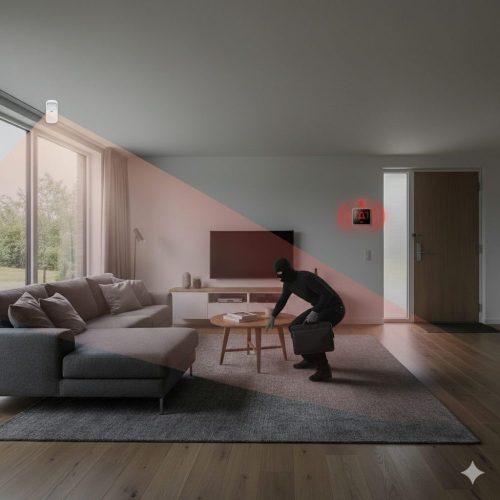
Position sensors to cover the space just inside primary entrances, such as your front door, back door, and patio doors. For the best coverage, mount a sensor in a corner, angled toward the doorway to create a wide detection field anyone entering must cross.
3. Maximize “Crossing” Movement
PIR sensors are most sensitive to movement that crosses their field of view, rather than movement coming directly toward or away from them. When planning, imagine the detection pattern as a series of invisible beams; you want an intruder to walk across as many of them as possible.
4. Install at the Optimal Height
The ideal mounting height is between 2 and 2.5 meters. This elevation provides a broad view of the room and, when angled slightly downward, helps prevent accidental triggers from pets or small children.
5. Leverage Corner Placement
Mounting a sensor high in the corner of a room gives it the widest possible field of vision. This allows a single unit to cover a larger area efficiently, making it a highly effective and economical strategy.
Critical Locations to Monitor
-
Main Hallways and Stairwells: Essential for detecting movement between floors and rooms.
-
Rooms with Valuables: Protect offices, studies, or any room containing specific high-value assets by ensuring the sensor has a clear, unobstructed view.
-
Basements: A frequently overlooked entry point. Be sure to cover the area near basement doors and windows.
Avoiding False Alarms: Locations to Steer Clear Of
PIR sensors can be triggered by rapid heat changes. Avoid these common pitfalls:
-
Direct Sunlight and Windows: Never point a sensor directly at a window. Sunlight throughout the day or moving car headlights at night can easily cause false triggers.
-
Heat Sources: Maintain a distance of at least 3 to 4.5 meters from radiators, HVAC vents, fireplaces, space heaters, and ovens.
-
Obstructions: Ensure the sensor’s view isn’t blocked by large furniture, tall plants, or curtains. Not only do these create blind spots, but curtains moving in a draft can also trigger an alarm.
-
Unstable Surfaces: Mount sensors on solid, stable walls or surfaces. Vibrations from appliances like washing machines or even a slamming door on a thin wall can be misinterpreted as motion.
Special Considerations for Pet Owners
Living with pets doesn’t mean you have to sacrifice security.
-
Invest in Pet-Immune Sensors: These detectors are calibrated to ignore motion from objects below a specific weight or height threshold.
-
Use Strategic Placement: Even with standard sensors, you can minimize pet-related false alarms.
-
Mount the sensor so that your pet cannot climb onto furniture or stairs that fall within its primary detection zone.
-
Angle the sensor to focus on movement at human-torso height, allowing smaller animals to move safely below the main coverage area.
-
Final Thoughts
By thoughtfully placing your indoor PIR detectors, you create a powerful, intelligent layer of security for your home. Following these guidelines will help you maximize coverage of likely intruder paths while maintaining a peaceful, false-alarm-free environment.
Follow us on Facebook